
If you have ever been diagnosed with obstructive sleep apnea (OSA), you are likely all too familiar with the standard treatment recommendation: the Continuous Positive Airway Pressure (CPAP) machine.
For decades, CPAP has been the gold standard, but for many people, it feels less like a medical solution and more like a nightly battle.
Between the bulky masks, the restrictive hoses, the constant hum of the machine, and the uncomfortable forced air, many patients find themselves asking: Is there any other way?
Fortunately, the answer is a resounding yes. If you are struggling to stay compliant with your machine or are newly diagnosed and hesitant to start, you are likely looking for alternatives to CPAP for sleep apnea.
Custom oral appliances are CPAP alternatives that work by fitting seamlessly into your lifestyle while protecting your long-term health.
Below, we’ll cover:
- What oral appliance therapy is for sleep apnea treatment
- Are oral appliances good at treating obstructive sleep apnea?
- What to expect if you have moderate obstructive sleep apnea
- How sleep apnea patients can benefit from visiting an experienced dentist
What Are Oral Appliances for Sleep Apnea?
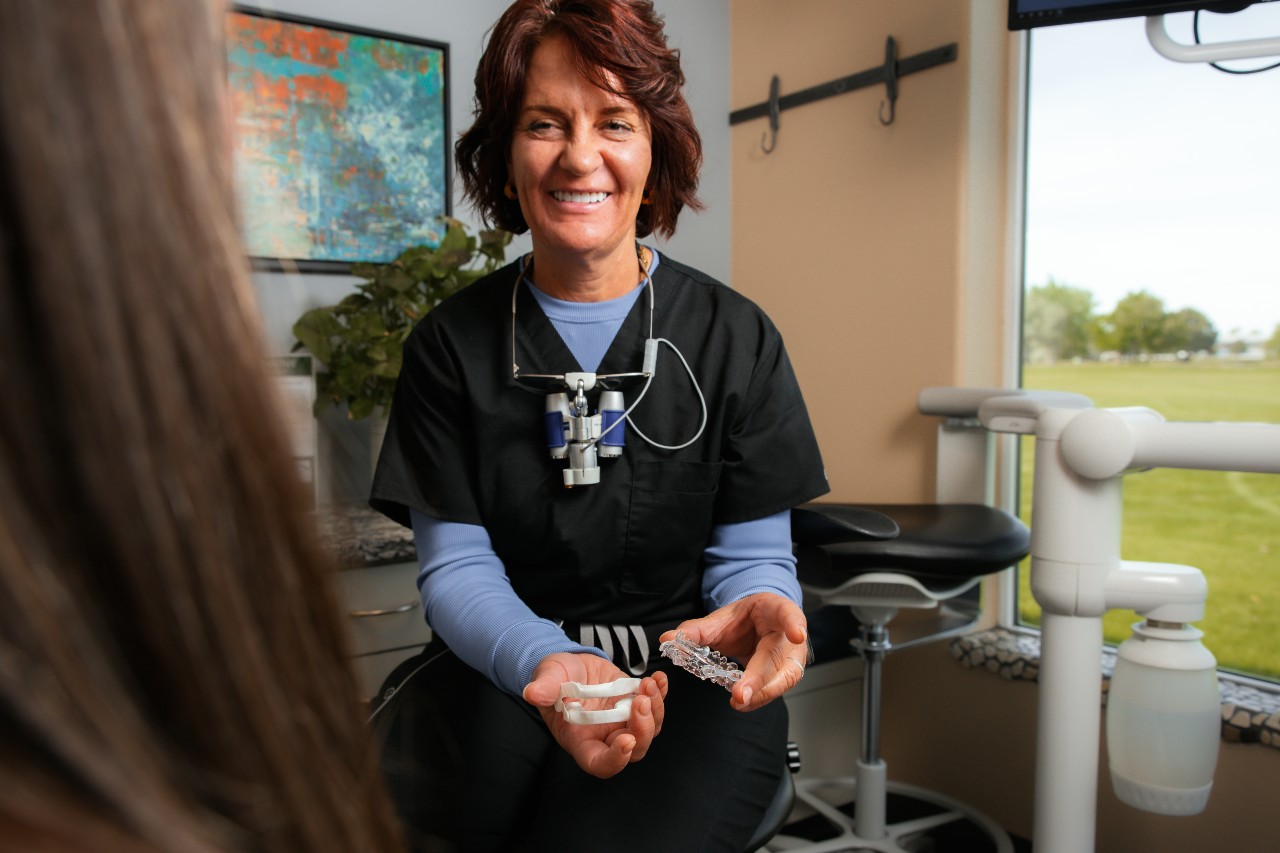
When people think of a CPAP machine alternative, they often picture over-the-counter mouthguards designed to stop snoring. However, FDA-approved medical oral appliances for sleep apnea symptoms are entirely different.
An oral appliance is a custom-fitted dental device prescribed by a sleep specialist and crafted by a qualified dentist. Unlike generic boil-and-bite mouthguards, these are precision-engineered medical devices designed to manage a specific medical condition.
They are light, discrete, and require no electricity, making them a highly sophisticated alternative to CPAP machine therapy or other surgical treatment for sleep disordered breathing.
There are two primary types of oral appliances that are used as alternative treatments:
- Mandibular Advancement Devices (MADs): The most common style, which looks similar to a sports mouthguard or an orthodontic retainer
- Tongue Retaining Devices: Devices that hold the tongue forward to keep it from falling backward into the throat
How Oral Appliances Work as Alternatives to CPAP for Sleep Apnea
To understand why oral appliances are such effective alternatives to CPAP, it helps to look at the root cause of obstructive sleep apnea.
During sleep, your throat muscles relax. For those with OSA, this relaxation causes the soft tissue in the back of the throat and the tongue to collapse into the airway, blocking the flow of oxygen.
A CPAP machine fixes this by using pneumatic splinting, blowing a constant stream of pressurized air down your throat to keep the airway open.
Unlike CPAP machines, oral appliances take a completely structural, mechanical approach to getting quality sleep.
- Jaw Repositioning: The device gently and precisely advances your lower jaw (mandible) slightly forward.
- Airway Stabilization: Because your tongue and the soft tissues of your throat are connected to your lower jaw, moving the jaw forward naturally tightens these tissues.
- Tongue Control: This forward positioning prevents the tongue from collapsing backward, keeping your airway wide open all night long.
Instead of fighting against forced air pressure, your body simply maintains an anatomically open airway on its own.
Who Are Good Candidates for These CPAP Alternatives?
While oral appliances are incredibly effective, they aren’t a one-size-fits-all cure. They are primarily indicated for specific groups of people looking for alternatives to CPAP.
- Mild to Moderate Sleep Apnea: Clinical guidelines highly recommend oral appliances as a first-line treatment for patients with mild to moderate OSA.
- CPAP Intolerance: If you can’t tolerate CPAP, find CPAP masks uncomfortable, and can’t sleep through the night with it due to claustrophobia, skin irritation, or dryness, you are an ideal candidate.
- Specific Anatomical Features: Patients whose positional sleep apnea is worsened by lying on their back or those with a naturally recessed lower jaw often see phenomenal results.
- Active Lifestyles: If you travel frequently for work, love camping, or live off the grid, carrying a bulky machine is highly inconvenient.
Effectiveness and Success Rates
One of the biggest concerns patients have when exploring CPAP alternatives is whether they actually deliver results. The clinical evidence is clear: oral appliance therapy boasts impressive success rates.
For patients with mild to moderate sleep apnea, custom oral appliances have an efficacy rate hovering around 75% to 80% for significantly reducing apnea events. While a CPAP machine is theoretically 100% effective at eliminating apneas when worn, its real-world effectiveness drops drastically because so many patients abandon it.
Oral appliances often yield better long-term health outcomes simply because patients actually use them. Studies show that compliance rates for oral appliances are vastly higher than CPAP, frequently exceeding 85% of nights used.
The Advantages Over CPAP Machines for Better Sleep

When comparing an oral appliance to a CPAP machine alternative, the lifestyle benefits are immediately obvious.
- No Hooks, Hoses, or Masks: You can sleep in any position you want – side, stomach, or back – without a mask shifting and leaking air into your eyes.
- Perfect Silence: There is no motor noise for this positive airway pressure therapy, which means a quiet, undisturbed night for both you and your bed partner.
- Ultimate Portability: No checking bags at the airport, no hunting for distilled water in a foreign city, and no searching for an electrical outlet next to the hotel bed for your cpap therapy.
The Custom Fitting Process
Getting a true alternative to CPAP machine treatment or sleep apnea surgery requires a precise, customized protocol to guarantee safety and efficacy. This process should involve the following steps.
- Initial Evaluation: Review of your sleep study data and sleep disturbances, evaluation of your upper airway, and examination of your teeth and jaw joints
- Digital Impressions: Highly accurate digital impressions or physical molds of your teeth
- Custom Fabrication: Data of your breathing patterns, sleep quality and risk factors sent to a specialized laboratory where your custom device is created
- Fitting & Fine-Tuning: Fit the device to your mouth and teach you how to micro-adjust the jaw advancement gradually over time for maximum comfort and airway opening
- Follow-Up Care: Follow-up evaluations (and often a home sleep test) to make sure the device is successfully treating your sleep apnea without needing a cpap device
Adjustment Period and Expectations
It is completely normal to experience a brief adjustment period when you first begin wearing your appliance. During the first few weeks, you might experience temporary side effects such as mild jaw muscle awareness, increased salivation, or a slight dry mouth in the morning as you find the right sleeping position.
These symptoms are typically mild and resolve within a few minutes of taking the device out. Most patients adapt completely within one to two weeks, noticing a massive surge in their daytime energy, a reduction in morning headaches, and a complete cessation of loud snoring within days, helping to reduce the risk of other severe health problems such as high blood pressure.
Ongoing Care and Maintenance
Taking care of your appliance is straightforward. Daily cleaning requires brushing it gently with a soft toothbrush and mild liquid soap or a dedicated appliance cleaner.
Regular check-ups are important to make sure your teeth aren’t shifting and that the device remains in perfect working order. With proper care, a high-quality medical oral appliance can easily last several years before needing replacement.
Why Choose Breathe While You Sleep Wellness Center?

Treating sleep apnea episodes requires a deep understanding of dental sleep medicine. Dr. Snow has done advanced training in dental sleep medicine and is a diplomate with the American Board of Dental Sleep Medicine. At Breathe While You Sleep Wellness Center, we specialize in delivering evidence-based CPAP alternatives that work.
Our team is trained in evaluating structural airway issues, managing jaw mechanics, and tracking your clinical data to ensure your sleep apnea is actually being treated. We prioritize your comfort, your lifestyle, and your long-term cardiovascular health every step of the way.
At Breathe While You Sleep Wellness Center we understand healthcare can be costly. As a courtesy, we verify and bill your medical insurance.
We work as a team with your medical health care providers, collaborating and corresponding throughout the treatment.
Discover CPAP Alternatives That Actually Work at Breathe While You Sleep!
Struggling with CPAP or looking for alternative treatment options to cpap before starting machine therapy? Our custom oral appliances offer an effective alternative to cpap machine treatment – comfortable, quiet, and proven alternatives to cpap for sleep apnea that fit your lifestyle.
Contact Breathe While You Sleep today for a comprehensive evaluation to determine if oral appliance therapy is right for you. Experience cpap alternatives that work and finally get the restful sleep you deserve.
Call now to schedule your consultation and explore your options beyond CPAP!

