You’ve probably tried at least one. Maybe a nasal strip that peeled off by 2 a.m. A boil-and-bite mouthpiece that sat in a drawer after three nights. A chin strap that felt like it was slowly suffocating you. If any of that sounds familiar, you’re not alone, and you’re not out of options.
The anti-snoring product market is crowded because snoring itself has multiple causes. A device that helps one person may do absolutely nothing for another, not because the product is fraudulent, but because it was never designed to address what’s actually happening in your airway. Snoring occurs when airflow is partially blocked during sleep, causing tissues in the throat or nasal passages to vibrate. The blockage can come from nasal congestion, jaw position, throat collapse, sleep position, or a combination of all of them.
That mismatch between device and cause is why so many products end up unused. This guide cuts through the noise to explain what different devices actually do, which ones have real clinical support, and when snoring requires more than a store-bought fix.
In this post, you’ll learn:
- How to tell the difference between simple snoring and sleep apnea-related snoring
- What over-the-counter devices can and can’t do
- Why custom oral appliances are among the most effective CPAP alternatives that work
- How to match the right device to the actual cause of your snoring
Simple Snoring vs. Sleep Apnea Snoring: Why the Difference Matters
Not all snoring is the same, and treating it without knowing which type you have is one of the most common reasons people cycle through products without results.
Simple snoring is disruptive, but it doesn’t involve significant pauses in breathing. Sleep apnea-related snoring is different. With obstructive sleep apnea, the airway partially or fully collapses during sleep, causing breathing to stop and restart repeatedly through the night.
Snoring accompanied by choking, gasping, or excessive daytime fatigue may indicate sleep apnea and requires professional diagnosis. Chronic snoring can also be a warning sign of obstructive sleep apnea and may require medical attention. If your snoring is persistent, if your partner notices you stop breathing, or if you wake up exhausted despite a full night in bed, those are signs that a diagnosis should come before any device purchase.
Anti-snoring products are not a substitute for a medical evaluation when sleep apnea is possible.
Over-the-Counter Devices: When They Help and When They Don’t
Walk into any pharmacy and you’ll find a shelf of anti-snoring options. Here’s an honest look at what each one actually does.
Nasal strips and nasal dilators work by improving airflow through the nasal passages. They can help when nasal congestion or a collapsed nasal valve is contributing to snoring. For mild snoring tied to nighttime congestion or mouth breathing caused by restricted nasal airflow, they’re a reasonable first step. They do not address throat collapse, jaw position, or sleep apnea-related airway obstruction.
Chin straps are designed to keep the mouth closed during sleep, encouraging nasal breathing and reducing throat vibrations. They may help some mouth breathers. They can also be uncomfortable, and they’re not appropriate as a workaround for undiagnosed sleep apnea.
Boil-and-bite mouthpieces are the OTC version of mandibular advancement devices. They work by repositioning the lower jaw forward to create more space in the airway. The concept is sound. The execution is where they often fall short. Over-the-counter mouthpieces may lack the precision, comfort, and effectiveness of custom-fitted devices, which is why many people find them uncomfortable enough to abandon within a week.
OTC devices aren’t gimmicks across the board. For mild, cause-specific snoring, some of them help. The problem is that most people who’ve been snoring for years, or who’ve already tried two or three products, are dealing with something more complex than a nasal strip can fix.
Custom Oral Appliances: CPAP Alternatives That Work
When snoring is tied to jaw position or airway collapse, and especially when sleep apnea is involved, a custom mandibular advancement device is one of the most clinically supported alternatives to CPAP available.
Mandibular advancement devices reposition the lower jaw forward to create more space for airflow during sleep and are considered highly effective for many people with chronic snoring and obstructive sleep apnea. The key word is custom. A professionally fitted oral appliance is designed around your specific anatomy, adjusted to the precise jaw position that opens your airway without straining your joints. That’s a different device than a generic mouthpiece softened in boiling water.
Clinical practice guidelines from the American Academy of Sleep Medicine support oral appliance therapy for adults with obstructive sleep apnea who are intolerant of CPAP or prefer an alternative therapy, and specifically recommend a custom, titratable appliance rather than a non-custom device when oral appliance therapy is prescribed.
Oral Appliances vs. CPAP: Choosing What You’ll Actually Use
CPAP is widely considered the gold standard for sleep apnea treatment, and for good reason. It’s highly effective when used consistently. The challenge is that some patients can’t tolerate the mask, the noise, the pressure, or the equipment that comes with it.
Oral appliances offer a quieter, more compact alternative to CPAP for the right patient. They’re easier to travel with, require no power source, and many patients find them more comfortable to wear through the night. For mild to moderate sleep apnea, and for patients who have tried CPAP and struggled with compliance, a custom oral appliance can be an effective CPAP machine alternative.
That said, CPAP may still be the better option for some moderate to severe cases. The right choice depends on your diagnosis, the severity of your sleep apnea, your anatomy, and what you’ll actually use consistently. A device that sits on your nightstand isn’t treating anything.
Other Alternatives to CPAP Worth Knowing
For some patients, the most effective approach combines a primary treatment with supportive changes. Sleeping on your back can worsen snoring because the tongue may fall backward and partially block the airway, so positional therapy, training yourself to sleep on your side, may reduce snoring for people whose symptoms are position-dependent.
Lifestyle modifications can also support treatment: reducing alcohol intake, maintaining a healthy weight, improving sleep hygiene, and clearing nasal passages before bed. These aren’t replacements for a properly fitted device when one is needed, but they can make a meaningful difference alongside it.
How to Choose the Right Anti-Snoring Device
Choosing the right device depends on the severity of snoring, personal anatomy, sleep position, nasal issues, and whether underlying health conditions are involved. That’s a lot of variables to sort out on your own in a pharmacy aisle.
The most practical path forward looks like this: first, determine whether your snoring may be connected to sleep apnea. If there’s any possibility it is, get evaluated before buying anything. Second, identify the likely cause. Nasal congestion, mouth breathing, back sleeping, and jaw position all point toward different solutions. Third, if you’ve already tried multiple OTC products without success, stop cycling through them. That pattern costs money and delays real treatment.
Professional guidance matters most when snoring is chronic, when OTC devices haven’t helped, when CPAP hasn’t worked out, or when sleep apnea is suspected.
Why Breathe While You Sleep
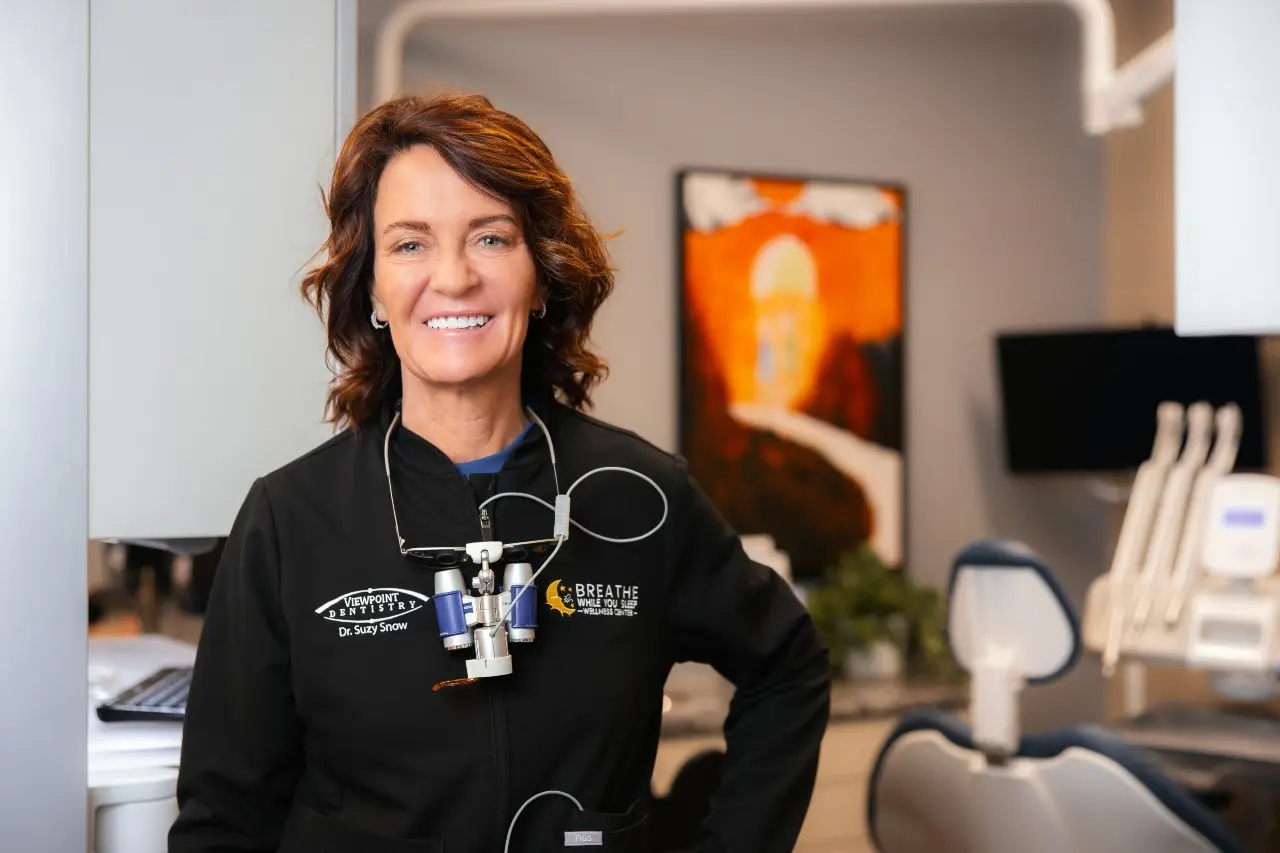
Breathe While You Sleep isn’t selling a product off a shelf. The process starts with understanding what’s actually happening while you sleep. The practice offers at-home sleep testing, consultations, and follow-up visits so patients have a real diagnosis before any treatment decision is made. They also handle medical billing and prior authorizations for most insurance plans, including Medicare.
For patients who are candidates for oral appliance therapy, Breathe While You Sleep provides custom-fitted appliances designed to reposition the jaw and keep the airway open during sleep. This non-invasive approach may be particularly effective for people with mild to moderate obstructive sleep apnea. The goal isn’t to hand you a device and send you home. It’s to match you with a solution that fits your specific anatomy, then follow up to confirm it’s working.
Dr. Suzanne Snow completed mastery coursework through the American Academy of Dental Sleep Medicine and is a diplomate of the American Board of Dental Sleep Medicine. The care here is grounded in the same standards used by specialists in the field.
If you’ve been cycling through over-the-counter products, or you’re looking for a CPAP alternative matched to your actual needs, this is where that process starts.
Stop Wasting Money on Devices That Don’t Work
Tired of anti-snoring products that end up in your nightstand drawer? At Breathe While You Sleep, we specialize in CPAP alternatives that work: proven, custom-fitted oral appliances that address the root cause of your snoring. Whether you’re exploring alternatives to CPAP for sleep apnea or simply want to stop snoring effectively, we provide comprehensive evaluation and personalized treatment.
Contact Breathe While You Sleep today for a consultation and discover the most effective alternative to CPAP machine treatment for your specific needs. Call us at 509-940-1513 or visit us at 90 Columbia Point Dr, Richland, WA. Finally get the quiet, restful sleep you and your partner deserve.